


- Home
- About
- Practice Areas
- Business and Corporate Law
- Business Formation and Structuring
- Asset and Stock Purchases and Sales
- Trademark and Copyright
- Mergers & Acquisitions
- Business Valuations and Buyouts
- Business Financing and SBA Loans
- General Counsel Services
- Founders Agreements
- Shareholder Agreements
- Non-Compete, Non-Solicitation, and Non-Disclosure Contracts
- Joint Venture Agreements
- Licensing
- Asset Protection
- Franchise Agreements
- Business Dissolution and Restructuring
- Business and Commercial Litigation
- Real Estate
- Real Estate Fraud & NVAR Residential Sales Contracts
- Construction Disputes & Mechanics Liens
- New Home Construction and Builder Contract Disputes
- Asset Protection
- Easements
- Boundary Line Disputes
- Quiet Title Actions
- Adverse Possession Claims
- Injunctions, Nuisance, and Trespass Claims
- Title Litigation
- Real Estate Deeds
- New Deed Request
- Commercial Property Acquisitions, Sales, and Development
- Commercial Leasing Disputes
- Landlord-Tenant Disputes
- Real Estate Brokers & Agents
- Condominiums, HOA & Cooperatives Law
- Partition/Allotment Actions
- Mold, Asbestos, and Toxic Torts Defense
- Hard Money Loan Agreements
- Real Estate Investors
- Property Managers
- Wholesaling Agreements
- Estate Planning
- Estate and Trust Litigation
- Business and Corporate Law
- Media
- Blog
- Contact Us


301-409-5316
 Attorney Profile
Rockville, Maryland Defamation Lawyers
"Great firm! Mr. Faisal is a kind and compassionate attorney. Got a good head on his shoulders. Anyone would be lucky to have him represent them."
Protect Your Investments Contact Our Team Today
 The use of the Internet or this form for communication with the firm or any individual member of the firm does not establish an attorney-client relationship. Confidential or time-sensitive information should not be sent through this form.
I have read and understand the Disclaimer and Privacy Policy.
Attorneys Assisting With Business Litigation Involving Defamation in Rockville
False statements can cause serious damage to a company, or they could affect the activities of a business owner or the career of an executive or other professional. These statements could destroy a reputation that had been built over many years, leading to financial losses and other forms of harm. When a competitor, a former business partner or employee, a customer, or another person makes a false statement that harms a business, the damage that these statements have caused may be addressed through a defamation lawsuit.
Business defamation cases can be complicated, because they may involve lost profits, damage to customer relationships and other business relationships, harm to a company's goodwill and standing in the industry, and other serious concerns. Business owners who have experienced harm because of defamation will need to understand their legal options. At Fox & Moghul, our business litigation attorneys can provide representation in these cases, helping to resolve disputes successfully while protecting our clients' interests.
Legal Help in Defamation Cases
Pursuing or defending against a defamation claim will require a careful review of the statements that have been made and the actual harm suffered by a business. Our attorneys have years of experience handling complex business litigation cases in Rockville and throughout Maryland. We can gather evidence of defamation and take steps to demonstrate the harm that has occurred. We will work to build cases that will help our clients repair the damage that has been done. We can also help defend against claims of defamation and take steps to resolve the legal issues involved in these cases.
Our law firm has represented clients in a wide variety of business litigation matters, and we know how to achieve success in these cases. We have won multiple awards recognizing the quality of our legal services, and our team members serve as educators for other legal professionals, helping them understand the best approaches to take when litigating business disputes. This level of knowledge, skill, and experience ensures that we can provide the representation clients need as they address business disputes.
What Is Business Defamation?
Defamation will typically involve a false statement of fact about a company, its products, its services, or the people who run it. A statement may be considered defamation if it causes actual harm, including financial losses or reputational damage. Defamation is generally divided into two categories.
- Libel: False statements made in writing, such as a printed article, a social media post, or an online review.
- Slander: A false statement that is spoken, such as comments made during a meeting, a phone call, or a public presentation.
Defamation claims may be related to false statements made by competitors, former employees, vendors, or customers. A statement that falsely accuses a business of fraud, incompetence, or illegal conduct can quickly spread and cause lasting harm, and a business may take steps to address the damages that have occurred because of defamation.
Elements Required to Prove Defamation
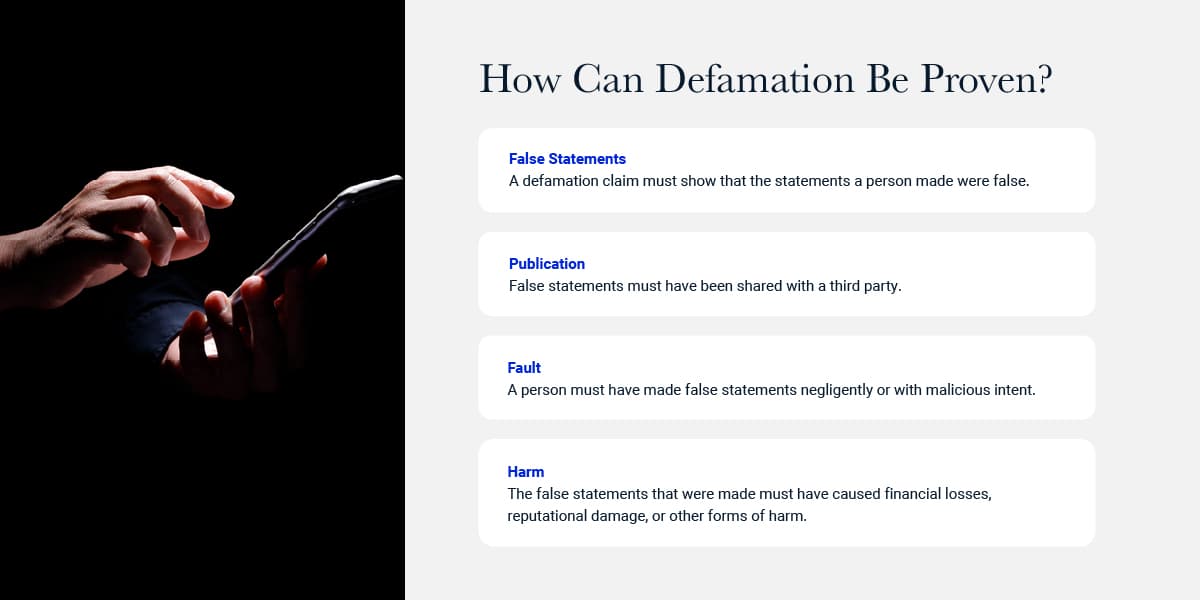
To succeed in a defamation lawsuit in Maryland, a business will need to prove several elements:
- False Statement: The plaintiff must show that the statements made by the defendant were false. Statements of opinion are generally not considered defamatory because they cannot be proven to be true or false.
- Publication: The statement must have been communicated to at least one other person. Written statements or verbal statements made to third parties may qualify as defamation.
- Fault: The person who made the statement must have either acted negligently or with intent to cause harm.
- Damages: The statement must have caused actual damage to a business, such as the loss of business opportunities, harm to a business's reputation, or other issues that led to financial losses.
Excellence Always

Examples of Business Defamation
Defamation can take many forms, including:
- A competitor falsely claiming that a business uses unsafe materials or has violated health codes.
- A former employee posting false claims online stating that a business engaged in fraud or failed to pay wages.
- A vendor falsely telling other companies that a business failed to honor its contracts.
- A customer posting a review containing fabricated claims about criminal activity at a business.
- A public statement falsely claiming that a company's leadership engaged in illegal financial practices.
A situation will need to be reviewed carefully to determine whether statements rise to the level of defamation. A statement that is based on an opinion or is generally true may not be considered defamation, but statements that are demonstrably false may serve as the basis for defamation claims.
Remedies Available in Business Defamation Cases
When a court finds that defamation has occurred, several types of remedies may be available to address the harm that has been done. These may include:
- Compensatory Damages: The defendant may be required to make a payment to the plaintiff to cover the actual losses that occurred because of defamation, including lost profits or lost business opportunities.
- Injunctive Relief: A court may order the defendant to remove any false statements, issue retractions or corrections, or prohibit them from making similar statements in the future.
- Punitive Damages: Additional damages may be awarded in some cases to address statements made through malice and purposeful attempts to cause harm to a business. Punitive damages are meant to punish a person for engaging in harmful conduct.
Frequently Asked Questions About Defamation Cases FAQs
Answer: Negative reviews may qualify as defamation if they contain false statements of fact rather than opinions. A person who is genuinely dissatisfied with a business or its products or services will typically be allowed to share their opinions. However, if a person falsely claimed that a business engaged in illegal conduct, left a review when they were never a customer of a business, or made other false statements, their review may be addressed through a defamation claim. In addition to showing that the statements in a review were false, a business will need to demonstrate that the review led to actual harm.
Answer: Maryland law provides a one-year statute of limitations for defamation claims. A business will generally be required to file a lawsuit within one year after the date the false statement was made.
Answer: Not always. In cases involving egregious conduct or actual malice, the damages may be considered to be self-evident. In these cases, harm may be presumed without requiring specific proof of financial losses. In other cases, evidence of actual damages may need to be provided.
Contact Our Rockville, MD Defamation Litigation Attorneys
False and damaging statements can affect a company for years if they are not addressed properly. At Fox & Moghul, our attorneys can help business owners or other parties determine how to respond to defamation or how to defend against defamation claims. Contact our Rockville business defamation lawyers at 301-409-5316 to schedule a consultation.
